Editor score 4.2 / 5
Defining What QC Photos Can Support for Acne Studios Scarves Before buying an Acne Studios scarf, QC photos are best used to answer: whether the current item's label, edge structure, color presentation, and obvious flaws have clear enough visual evidence. They cannot alone prove material composition, feel, warmth, authenticity, or final quality upon arrival. This article focuses only on the corresponding Acne Studios scarf on the fashion-reps pro
Defining What QC Photos Can Support for Acne Studios Scarves
Before buying an Acne Studios scarf, QC photos are best used to answer: whether the current item's label, edge structure, color presentation, and obvious flaws have clear enough visual evidence. They cannot alone prove material composition, feel, warmth, authenticity, or final quality upon arrival.
This article focuses only on the corresponding Acne Studios scarf on the fashion-reps product detail page and its View QC Photos gallery. After reading, readers are advised to complete one action: record visible evidence item by item, and request additional photos when key areas are blurry, obscured, or missing, before deciding to purchase, inquire, or pause. 📷
This article does not apply to products without a corresponding product detail page, only category or brand images, or cases where QC photos from other products are mistaken for the current order.
Verification records are based on the product information and QC photo gallery provided on the page. Page records show that the QC photo entry for this item is View QC Photos; product price, stock, service fees, and international shipping should still be reconfirmed on the actual shopping agent page before placing an order.

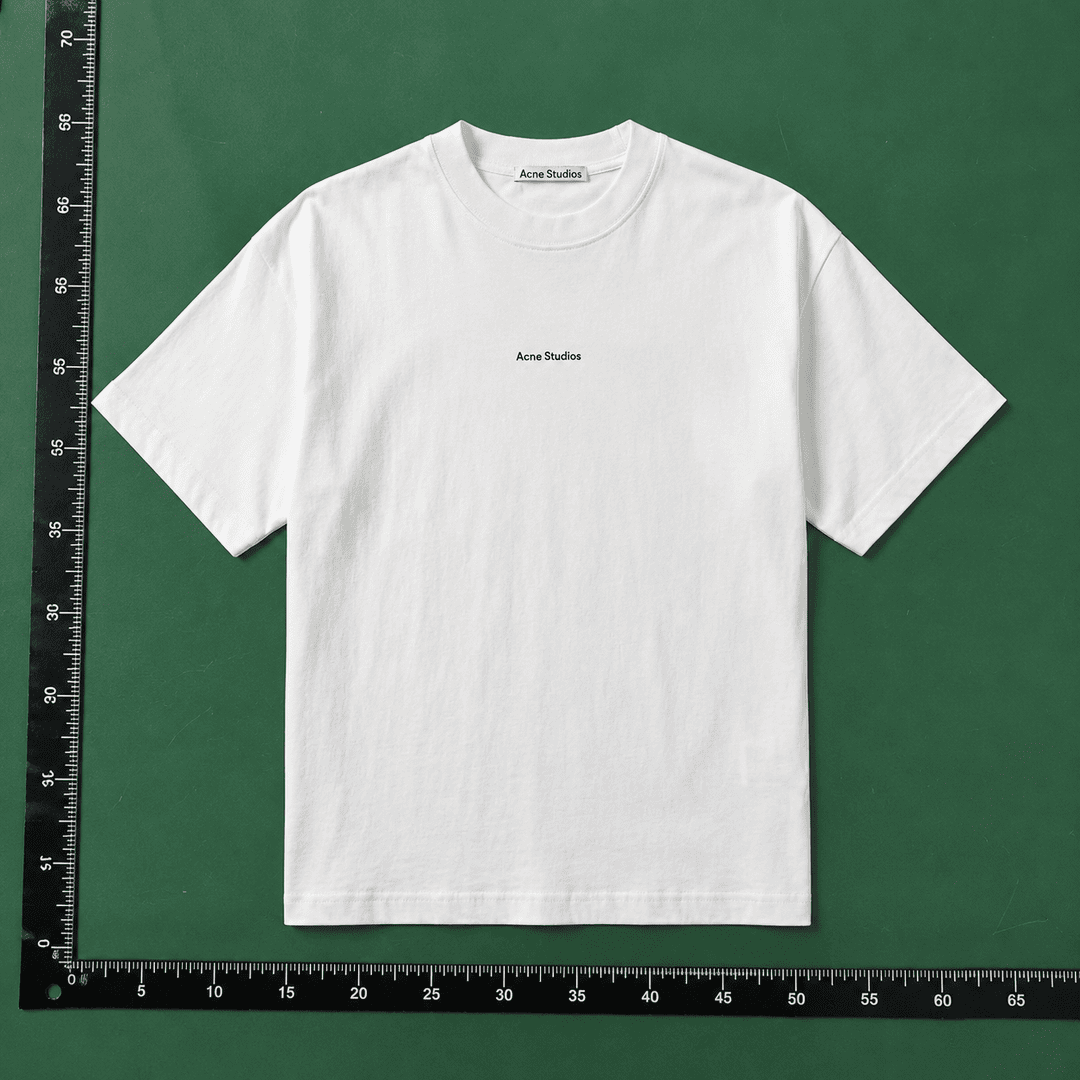
Figure: QC reference image for the corresponding product. The image is used to locate the inspection subject and should not be interpreted as a guarantee of authenticity or quality.
Check Style, Color, Specifications, and Links on the fashionreps Product Detail Page
The first step must start from the product detail page, not by guessing or piecing together QC URLs. After opening the corresponding Acne Studios product detail page on fashion-reps.net, first confirm the following:
- Does the product title clearly point to the target scarf, not a top, accessory, or other style from the same brand?
- Do the color name, specifications, or style options on the page match the options you intend to purchase?
- Is there a button named View QC Photos on the page?
- After clicking the button, do the QC photos still correspond to the current product and current options?
- Are there any obvious name or color conflicts between the product page, QC gallery, and the options you plan to order?
If the product page does not have View QC Photos, or the button opens content that cannot show product correspondence, do not use images from category pages, brand pages, homepages, or other products as QC evidence for this item. 🧭
The price, stock, service fees, international shipping costs, and available routes displayed on the page may change. QC photos can only help judge the visible condition in the images, and cannot replace confirmation of fees and policies on the order page.
Click View QC Photos to Get the Actual QC Originals for This Product
After entering the product detail page, click View QC Photos in the page. Keep the page context during inspection, at least confirming that the product name, style, or options are still visible. This reduces the risk of mixing up adjacent products or same-brand images.
Actual QC originals should meet three conditions:
- The images come from the QC entry on that product detail page.
- The images show the product body or clear local structure.
- The images are not overlaid with other product names, different colors, or different style contexts.
If the QC gallery only provides one distant shot, you cannot infer that labels, edges, or color details are fine. A large number of images does not mean complete evidence; the key is whether they cover the areas you intend to judge.
Inspect Scarf Edges, Binding, Fringe, or Other Visible Structures on the Page
The edges of the scarf are relatively easy to compare in QC photos. When zooming in one by one, observe in the following order:
- Are both long and short edges photographed, or only partial edges?
- Is the binding width roughly uniform in the same image?
- Are there obvious waves, curls, notches, or discontinuous areas on the fabric edge?
- Are there obvious length differences, abnormal knots, or large unraveling in the fringe or raw edge?
- Are there visible skipped stitches, broken threads, loose threads, or local density changes in the stitching?
- Does the fold obscure the edges, making it impossible to judge the full length?
These are only appearance observations from images. You cannot infer the durability of the entire scarf just because one area looks flat; nor can you directly conclude that the item cannot be returned or exchanged because there are loose threads in the image. You should first save the corresponding image location, and then consult with the platform's after-sales conditions.
| Inspection Area | Visible Facts That Can Be Recorded | Handling When Images Are Insufficient |
|---|---|---|
| Long and short edges | Whether photographed, whether edges are continuous, whether there are obvious notches | Request separate photos of all four edges or a fully spread flat lay |
| Binding or hemming | Whether width is roughly consistent, whether there are obvious skipped stitches and loose threads | Request close-up, front-facing, non-reflective local images |
| Fringe or raw edge | Whether fully covered, whether length differences are obvious, whether there is unraveling | Request edge photos in natural hanging state |
| Folded areas | Whether obscured by creases or overlaps | Request unfolding before photographing, avoid only folded state |
Compare Label Position, Text Clarity, and Color Presentation Differences
Label inspection should distinguish "visible" from "legible." First confirm the approximate location of the label on the item, then observe the text, stitching edges, and fabric condition around the label. If only a corner of the label is shown, you cannot fill in the unshown content as confirmed facts.
Items that can be recorded include:
- Is the label fully in frame, or is it folded, obscured, or covered by glare?
- Is the text outline clear, and can it be read character by character?
- Are there obvious skewing, loose threads, or discontinuous stitching on the label edges?
- Is the care label or composition label photographed, and is the text clear enough?
- Is there an obvious visual difference between the label color and the main color of the item?
When checking color, first use the color name selected on the product detail page as the baseline, then compare with QC photos. Do not judge the actual color based solely on a color block on the screen, because lighting, white balance, background, and monitor can all affect presentation. Focus on recording "what it looks like in the image," rather than writing "the actual item is this color." 🎨
For example, you can write "QC photos show a yellowish gray under warm lighting, cannot confirm if same in natural light"; do not write "the item is warm gray." If the color name on the product page differs greatly from the visual in QC photos, consult first, do not substitute a similar color on your own.
Record Evidence Gaps Caused by Folding, Glare, Obstruction, and Low Resolution
The limitations of QC photos are also part of the judgment result. It is recommended to record using the following categories:
- Visible facts: areas, color presentation, loose threads, creases, or obvious stains that are indeed visible in the images.
- Editorial judgment: careful assessment of whether evidence is sufficient based on image clarity and coverage.
- Cannot confirm: conclusions that cannot be drawn from images due to folding, glare, shadows, obstruction, or low resolution.
Common evidence gaps include:
- Folded state obscures most edges, making it impossible to judge whether there are continuous notches.
- Glare covers label text, preventing confirmation of letterform and print clarity.
- Shadows make dark areas look uneven in color, cannot confirm whether it is a dye difference.
- Distant shots show the overall item, but cannot judge stitches, fringe, or label details.
- Severe image compression, after zooming only pixel blocks are visible, cannot judge print or text errors.
In these cases, prioritize requesting targeted additional photos rather than more repetitive distant shots. Additional photo requests should specify the area, angle, and purpose, for example: "Please unfold the item, photograph all four edges from the front, and add a close-up of the label, avoiding glare and folding obstructions."
Separately Present Visible Facts, Editorial Judgment, and Unconfirmable Material or Authenticity Conclusions
QC photos can support preliminary appearance-level checks, but cannot replace material testing, physical measurement, laboratory identification, or platform after-sales adjudication. In particular, you cannot claim that an item is authentic, genuine in material, or guaranteed in quality based solely on labels, colors, and stitching.
It is recommended to write inspection records in three columns:
- Visible facts: e.g., "one corner of the label is folded and obscured," "one long edge is in frame," "images taken under warm lighting."
- Editorial judgment: e.g., "currently sufficient for preliminary check of label position, but not sufficient for checking complete text."
- Next action: e.g., "request unfolded photos and label close-up, then decide after receiving."
If images show obvious stains, damage, loose threads, or inconsistent color options, save the original images and product context, then ask the shopping agent whether exchange, additional photos, or cancellation is possible. Do not assume that returns or exchanges are guaranteed, nor write unconfirmed processing results as established rights. ⚠️
Final Action: Decide on Additional Photos, Consultation, or Pause Based on QC Evidence Completeness
You can conclude with three outcomes:
- Evidence basically complete: product correspondence is clear, labels, edges, and color options all have sufficiently clear image coverage; still need to confirm price, stock, service fees, shipping routes, and after-sales conditions on the order page.
- Need additional photos or consultation: product correspondence is clear, but key areas are affected by folding, glare, obstruction, or low resolution; first make specific additional photo requests, then continue judgment.
- Pause purchase: QC photos cannot confirm product correspondence, color or style conflicts with detail page, or obvious flaws exceed acceptable range; do not continue payment until the platform responds.
Combining packages or choosing shipping routes will not fix the label, edge, or color issues of the item itself. If you ultimately purchase multiple items, save QC evidence for each item separately to avoid mixing up problem sources after consolidation. Suitable for buyers who value appearance details, are willing to check images item by item, and wait for responses when evidence is insufficient; not suitable for those who need authenticity or quality assurance based solely on product main images.
The conclusion boundary of this article is clear: QC photos can help you decide whether to request additional photos, consult, or pause, but cannot alone prove the material, authenticity, durability, or final arrival condition of an Acne Studios scarf.