Editor score 4.2 / 5
The Single Goal of Ami Paris Cardigan QC Verification This guide addresses a specific issue: after viewing the corresponding QC photos in the View QC Photos section on a fashion-reps product listing, how to determine whether the page options match the warehouse's actual photos, and then decide whether to proceed with the order, request action, or hold off. The focus is solely on color, size markings, knit structure, neckline, cuffs, hem, stitching, prints, and visible flaws—without expanding
The Single Goal of Ami Paris Cardigan QC Verification
This guide addresses a specific issue: after viewing the corresponding QC photos in the View QC Photos section on a fashion-reps product listing, how to determine whether the page options match the warehouse's actual photos, and then decide whether to proceed with the order, request action, or hold off. The focus is solely on color, size markings, knit structure, neckline, cuffs, hem, stitching, prints, and visible flaws—without expanding photo observations into guarantees of authenticity or durability.
Before verification, confirm the product listing page, product name, color option, and size option. Then enter the View QC Photos section from that listing and use the actual QC images provided. Do not guess image gallery URLs, and do not use homepage, brand page, category page, main product image, other product images, or AI-generated images as substitute evidence. 🧭
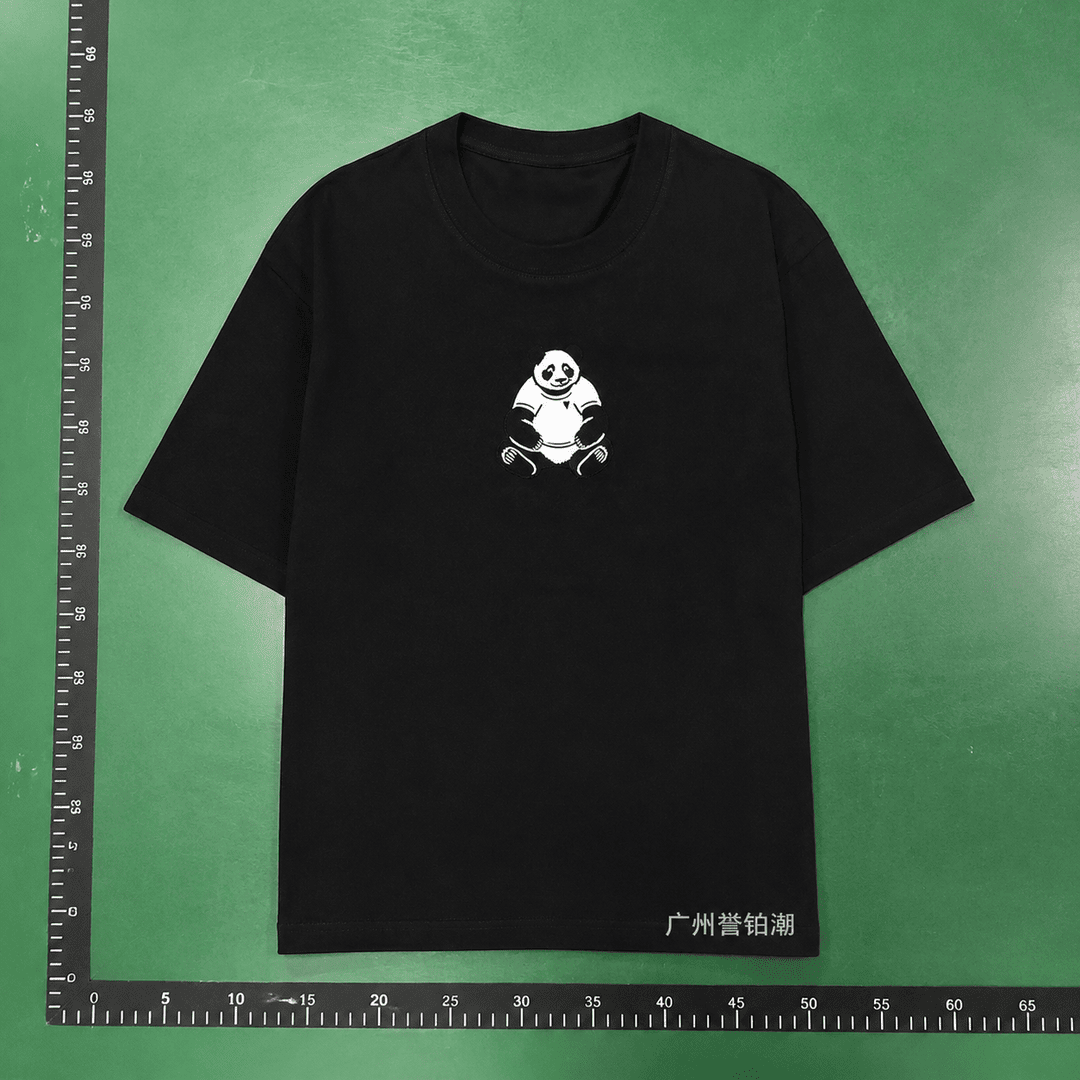
The specified image is used only as product evidence illustration for this article:

The product summary visible in the image shows inconsistency with the "cardigan" topic: the summary clearly states it is an Ami Paris Navy Heart-Print Tee, not a cardigan. Therefore, this image or summary cannot serve as evidence for the cardigan's color, size, material, or stitching. This conflict itself is a verification result to retain: if the page name, options, or QC gallery correspond to a different product, pause judgment and re-enter View QC Photos from the target cardigan's listing.
First Open the Corresponding fashion-reps Product Listing and Record Options
After entering the target product listing, record the following:
- Full product name, especially whether it says cardigan, knit, sweater, or other category description.
- Currently selected color name, along with the color image or swatch displayed.
- Currently selected size, including letter sizing, numerical sizing, and whether there are extended or relaxed versions.
- Style code, seller information, and page update time shown on the listing.
- Whether View QC Photos is indeed located within that product listing.
The purpose of recording this information is so that every subsequent QC photo can be traced back to the same product and same set of page options. If the page only has similar styles, a collection page, or a tag page, that does not count as having opened the target product listing.
Page options are just a record of selections at order time, not physical proof. Color names may cover multiple shades, and size names may only represent the seller's internal specifications. Final judgment must be based on the garment body, tags, and details visible in the corresponding QC images. 📌
Obtain the Product's Actual QC Images via View QC Photos
After clicking View QC Photos on the target product listing, review the images in gallery order—not just the first image. It is recommended to retain the following evidence sequence:
- First full-body or flat-lay image to confirm overall color and style silhouette.
- Close-ups of the neckline, chest, and main print to confirm pattern placement and obvious misalignment.
- Size tag, care label, or packaging markings to cross-check page options with actual labels.
- Cuffs, hem, and shoulder details to observe knit structure, edging, and local deformation.
- Left and right sides, back, and easily obscured areas to detect color differences, stains, snags, or structural asymmetry.
Visible facts in images should be expressed with cautious language such as "the photo shows," "visible from this angle," "no obvious... observed." Do not write "no problem at all" when something is not seen in the photo, nor describe a flat-lay state as how the garment fits when worn.
If View QC Photos opens to show a different category, different color, or different style, stop comparing. The current source summary shows an Ami Paris Navy Heart-Print Tee, which cannot support a cardigan QC conclusion. Re-locate the target product rather than filling in missing evidence with similar names.
How to Compare Color, Size Markings, and Knit Structure Image by Image
For color verification, first look at the overall hue of the entire garment under natural or stable lighting, then check whether the neckline, cuffs, side seams, and inner/outer layers show obvious color differences. Screen display, shooting lighting, and white balance all affect color, so you can only judge "matches page options or is questionable," not confirm an exact color code from a single photo.
When checking, record in this order:
- Whether the page color name matches the garment's main color.
- Whether there is abnormal color difference between the body, ribbed trim, and decorative parts in the same image.
- Whether color is consistent across different QC images, or if they seem to come from different batches or products.
- Whether there is base color bleeding, misalignment, or incomplete edges around prints, embroidery, or logos.
For size verification, prioritize viewing size tags, packaging labels, or clear measurement diagrams. Matching letter size does not guarantee that chest, length, shoulder width, and sleeve length meet expectations. If the page has no measurement diagram, you cannot infer actual size from how large the garment appears in the image.
For knit structure, observe:
- Whether stitches or knit texture remain continuous over large areas.
- Whether left/right front panels, shoulders, and sleeve connections show obvious misalignment.
- Whether ribbing at neckline, cuffs, and hem has looseness, broken threads, or severe deformation.
- Whether the surface has protruding threads, snags, holes, stains, or unnatural localized bulges.
- Whether decorative patterns have obvious skipped stitches or breaks at knit texture boundaries.
These items only describe the visible state in photos, not proof of fiber content, warmth, shrinkage after washing, or long-term durability. 🧶
Visible Inspection Order for Neckline, Cuffs, Hem, and Stitching
For the neckline, first check whether the curve is continuous, ribbing width is roughly even, and seams have obvious gaps. If the neckline is obscured by hanger, packaging, or folding, mark it as "cannot fully confirm" rather than passing it.
For cuffs, focus on whether both sides are symmetrical, edges are loose, and there are protruding threads near sleeve seams. If one side is clear and the other blurry, only report observations from the clear side.
For the hem, observe whether the edging is straight and whether there is localized curling or stretching. Knit garments can appear different when laid flat, hung, or worn, so slight waviness is not necessarily a defect, but obvious thread breaks, holes, or asymmetry should be recorded separately.
For stitching, examine along shoulders, side seams, armholes, and decorative edges section by section. Prioritize distinguishing three categories:
- Acceptable normal loose threads: only a few, short, and not affecting structure at edges.
- Points needing further confirmation: unclear stitching in areas, severe glare, or seams obscured.
- Obvious issues requiring action: holes, continuous unraveling, open seams, significant stains, or mismatch with page style.
Do not judge authenticity, brand authorization, or material grade based solely on images. Clear brand markings do not replace source, seller information, and platform handling records. 🔎
How to Preserve Evidence When Page Options and QC Photos Conflict
If the page selects a certain color but QC photos show a clearly different hue, first save the association between page options and the corresponding images, then request confirmation from the platform or seller. Do not modify records to treat the mismatched image as the target product image.
If the page size conflicts with the size tag, record both the page selection, physical label, and whether measurement diagrams exist. If the label is obscured, reflective, or low resolution, state that evidence is insufficient and request clear photos of size tag and key measurements.
If the gallery contains mixed styles—e.g., the source summary shows a Navy Heart-Print Tee while the target article discusses a cardigan—the safest action is to pause the order and reopen the target product listing. Do not use similar brand names, similar colors, or similar prints to fill missing evidence.
It is recommended to keep a brief record:
- Page product name and options.
- Entry path to View QC Photos.
- Inspection items for each image.
- Specific locations of visible issues.
- Items that cannot be confirmed and reasons.
- Questions already raised to platform or seller.
- Their responses and next check time.
This record helps handle repeated image submissions, image replacements, or re-verification, and avoids re-ordering when evidence is insufficient. ⚠️
Evidence Boundaries: Do Not Turn Photo Observations into Authenticity or Quality Guarantees
QC photos typically show the physical state at a specific time, angle, and lighting. They can help buyers identify color, size markings, stitching, and obvious surface flaws, but cannot alone prove authenticity, brand authorization, fiber content, post-wash performance, wearing comfort, or long-term durability.
Editorial judgment must also be separated from photo facts. For example, "no obvious holes visible in the photo" is a limited visible observation; "quality is good" lacks clear standards and sustained testing, and cannot be a conclusion. Even if the page describes certain materials or functions, treat it as seller or catalog information, not verified fact.
Similarly, clear images, intact tags, or normal print placement do not guarantee the product meets expectations. Purchase decisions should also consider return/exchange conditions, platform deadlines, response to supplementary photos, international shipping costs, and destination import rules. When clear target QC images are unavailable, pausing the purchase is usually more controllable than relying on guesswork.
Next Steps: Proceed, Request Action, or Hold Off
You may consider proceeding with the purchase when: the target product listing clearly corresponds to the QC gallery, color and size markings have no obvious conflict with page selections, neckline, cuffs, hem, and main seams have sufficiently clear images, and no structural issues are evident. This conclusion only means the image evidence meets the minimum clarity for the current purchase decision, not authenticity or quality assurance.
You should request supplementary photos or platform intervention when: color clearly does not match, size markings are inconsistent, key areas are obscured, the gallery contains other styles, there are holes or continuous unraveling, prints or decorations are clearly misaligned, or images cannot confirm key options promised on the page. When requesting, specify the area and the needed angle, not just "please check quality."
It is not advisable to proceed when: the target product cannot be accessed from its listing to the corresponding View QC Photos, the QC gallery consistently shows other products, page options repeatedly conflict with physical evidence, key size information cannot be confirmed, or the platform and seller cannot provide verifiable responses within the return/exchange window.
The final decision should also weigh time saved or costs avoided from mistakes, potential return/exchange and international shipping risks, who it suits, and conditions under which this approach is unsuitable. For buyers who need clear color, precise size, or accountable after-sales evidence, it is better to wait for clear target product QC photos than to substitute with similar product images.