Editor score 4.2 / 5
Set the Main Colors First, Then Arrange the Accents This flat lay scene serves as a reference for layering black-and-gray outfits: black and dark gray provide stability, light gray and white create contrast, and the blue-white sneakers become the most eye-catching color focal point. When styling, not every item needs to compete for attention—keeping one clear bright accent makes the overall look cleaner. 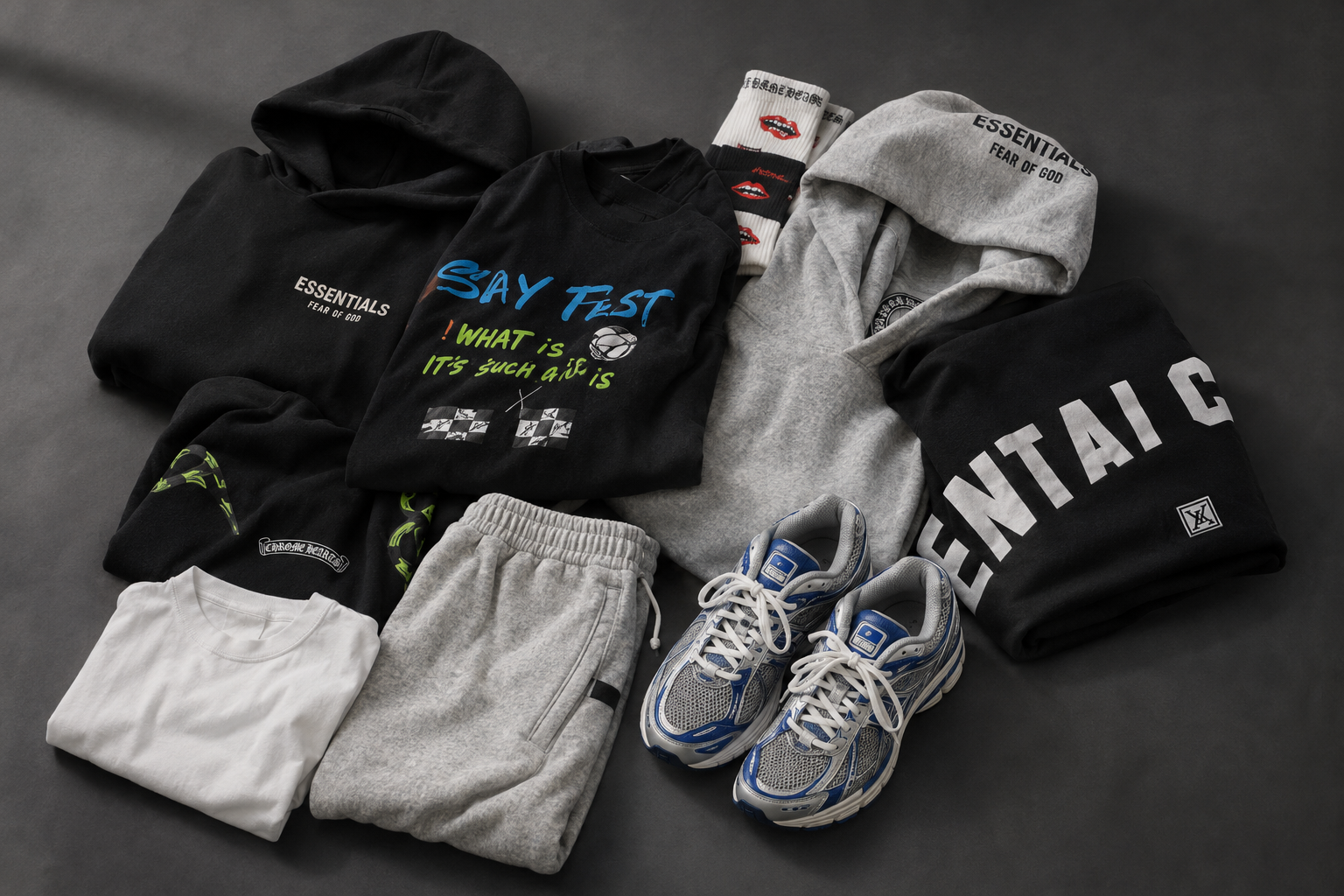
Set the Main Colors First, Then Arrange the Accents
This flat lay scene serves as a reference for layering black-and-gray outfits: black and dark gray provide stability, light gray and white create contrast, and the blue-white sneakers become the most eye-catching color focal point. When styling, not every item needs to compete for attention—keeping one clear bright accent makes the overall look cleaner.

Color Approach: Use Blue and White to Break the Heaviness of Black and Gray
The black top and hoodie in the image take up the main area, with one clearly labeled "ESSENTIALS" and the other featuring a blue-green English graphic as a visual accent. This combination suits a "dark base, cool-toned highlight" approach: black can serve as an outer layer, hoodie, or loose top, gray works for pants or layering, and the blue-white sneakers provide a light, lively feel.
For a cleaner look, treat the blue-green graphic and the blue-white shoes as one color echo, keeping other pieces primarily black, gray, and white. For a more streetwear vibe, add a small red-and-black patterned item as a secondary accent, but keep the red area minimal so it doesn't overshadow the blue-white shoes as the focal point.
Outfit Styling Suggestions
- Pair a black hoodie with light gray pants, using the contrast between top and bottom to avoid a monotonous look.
- Wear a black printed top over a white basic inner layer to make the blue-green graphic the visual center.
- Blue-white sneakers go well with gray pants or a white top, creating a clear cool-toned color echo.
- Black items with large English logos should be paired with minimal other bold patterns to avoid multiple competing focal points.
- Red-and-black socks or small accessories work better as local details rather than the main color of the outfit.
Flat Lay Arrangement: Section Off First, Then Leave Breathing Room
When arranging, place the largest black or gray clothing items at the back to form a stable base; then position the top with clear text or graphics in the middle, and finally put the shoes in the foreground or lower right area. If the shoe's upper, laces, and sole outline are distinct, keep them fully visible and not obscured by clothing edges.
Place light gray items next to the dark area to use color contrast to separate pieces. White tops work well near the edges or in lighter areas, avoiding complete overlap with gray items. If a green shoe box appears in the scene, treat it as an auxiliary color block and keep it near the shoes—no need to add more green objects.
Adjustments for a Clearer Image
The current scene includes multiple clothing items with rich layering, but some pieces overlap, and the slight tilt and dim lighting reduce detail visibility. When rearranging, ensure each main item shows at least one full edge and angle any lettering or graphic areas toward the camera. Shoes should be placed apart to avoid overlapping laces, upper sections, and sole outlines.
If showcasing a complete outfit, maintain three layers: the black-gray main colors, the blue-white sneakers, and a touch of red detail. This presents a rich selection while helping readers quickly see the color connections between pieces. The image helps observe appearance, colors, and layout, but cannot confirm size, fabric composition, model, authenticity, comfort, or durability; those details require checking the product specifications and information.