Editor score 4.2 / 5
Set the overall visual tone first This flat-lay is dominated by black, gray, white, and navy, with concentrated colors and clear light-dark layering, suitable for a clean athleisure look. The light gray top and light-colored shoes provide brightness, while black pants, shorts, and jacket anchor the overall weight. The navy zip-up jacket adds a slight color variation between black and gray. 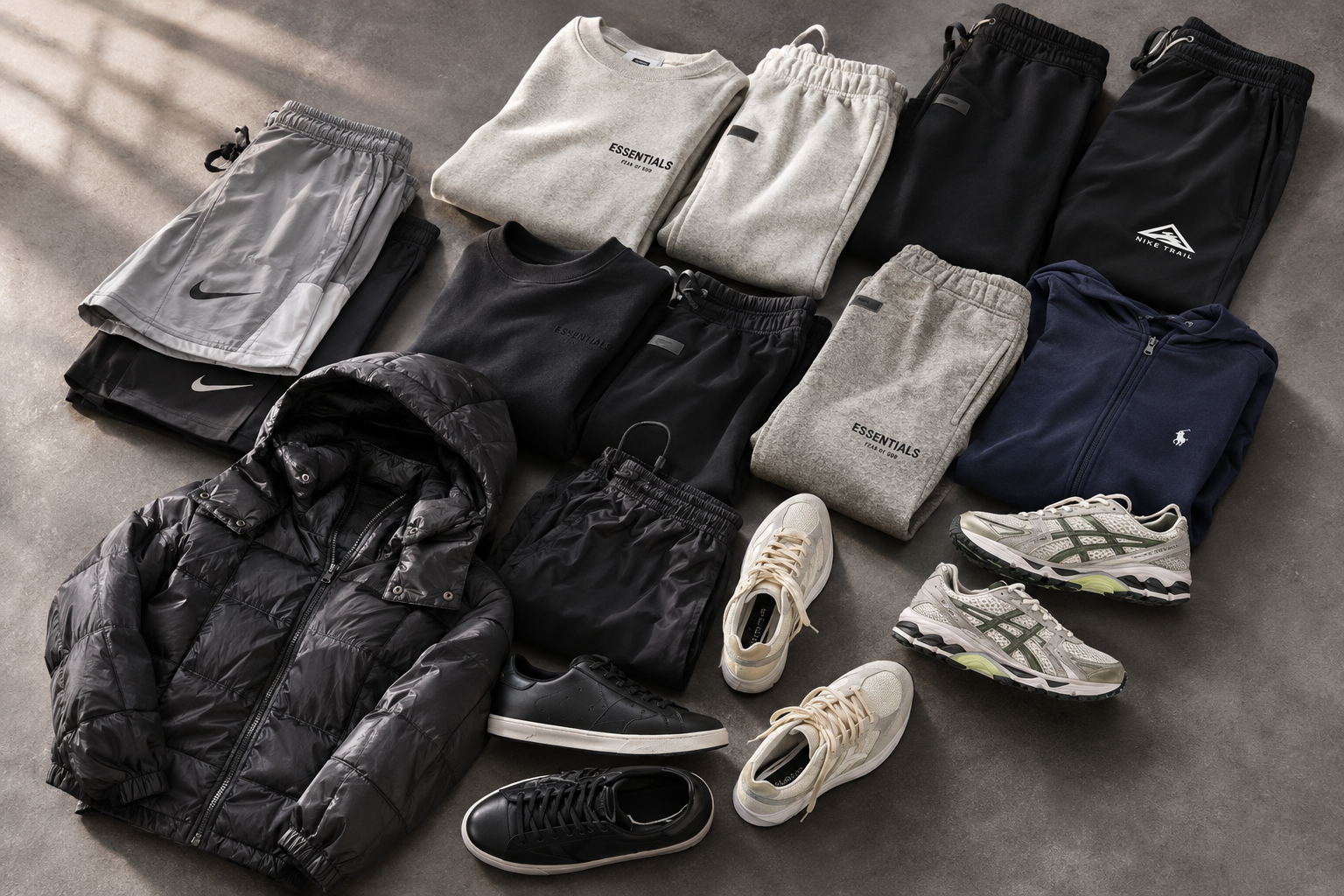
Set the overall visual tone first
This flat-lay is dominated by black, gray, white, and navy, with concentrated colors and clear light-dark layering, suitable for a clean athleisure look. The light gray top and light-colored shoes provide brightness, while black pants, shorts, and jacket anchor the overall weight. The navy zip-up jacket adds a slight color variation between black and gray.

For a more unified look, use black as the main color for bottoms or outer layers, and balance the visual weight with a light gray top and white shoe uppers. If you want to avoid a dull look, a navy jacket or light gray sweatpants can be used as a local variation, but avoid adding too many bright colors at once.
Three practical color pairing ideas
Black dominant, light gray as accent
Choose black pants or black athletic shorts, pair with a light gray top, and add white or light-colored sneakers. This combination has clear light-dark contrast, suitable for a simple and sharp effect. The light-colored areas on the shoe uppers can also echo the top, creating a continuous visual link between upper and lower garments.
Layered grays, anchored by black
A light gray top can be paired with gray sweatpants, with a black puffer jacket or black pants as the outer contrast. The light gray clothing in the image has different shades; when layering, use tonal differences to create depth. Black pieces work best placed at the edges, bottom, or as outer layers to prevent the display from looking too flat.
Navy as a small area of variation
A navy zip-up jacket pairs well with black bottoms and white or off-white sneakers. Since navy's brightness is close to black, it doesn't disrupt the overall low-saturation palette while distinguishing the outfit from a pure black-gray combination. When displaying, place navy pieces next to light gray clothing to make the color variation more visible.
Arrange clothing by layers
When creating a flat-lay, start by determining a focal point, then arrange other items around it. A light gray top, navy jacket, or a black jacket with a distinct silhouette works well as the center. Shorts, pants, and shoes are distributed around the center, creating a reading order from top to bottom to shoes.
When there are many clothing categories, follow this order:
- Place tops and jackets first to establish the main color blocks and overall direction.
- Then add pants and athletic shorts to vary the proportions.
- Finally, place shoes, prioritizing colors that echo the top or bottom.
- Position details like drawstrings, elastic waistbands, pockets, stitching, and shoe upper sections toward the open areas of the frame.
- When layering, leave some edges visible; avoid having all garments completely overlap.
In the image, some shorts are stacked, with black and light gray creating clear contrast; pants, tops, and jackets are spread across different areas, preventing the display from becoming one large dark block. You can use this approach: place similar colors adjacent but separate layers by differences in silhouette, length, or material appearance.
How shoes coordinate with clothing
Light-colored sneakers work well to connect a light gray top and gray bottoms, making the overall look lighter. Black casual shoes pair well with black pants or a black jacket to strengthen the stability of the lower half. The image also includes sneakers with dark and light color sections, which can echo both black clothing and light tops, making them suitable as transitional pieces between multiple outfits.
When arranging shoes, keep the toe directions generally consistent, or slightly turn one pair to avoid a mechanical look. Position laces, upper panels, and sole textures toward the camera to make details more visible; but leave space between shoes to prevent the light uppers from blocking each other.
Limitations to note before styling
This image is useful for judging colors, silhouettes, layers, and display relationships, but some clothing items are stacked or partially covered, so it is not possible to fully assess the front details of each piece. The letters, patterns, and partial logos visible in the image can only be described based on their appearance; brand or model cannot be confirmed from this image.
The image also cannot provide information on material composition, sizing, comfort, durability, price, stock, authenticity, or athletic performance. If you want to apply one of these combinations to an actual purchase decision, you will need to check the complete flat details, specifications, and size data for the corresponding items.