Editor score 4.2 / 5
If you're considering these Evisu gray jeans, the first issue to resolve isn't styling—it's whether the sizing and inseam will work with your existing wardrobe. The page lists both numeric waist sizes 28–36 and letter sizes S–3XL, but ordering based on just one familiar size might not tell you whether the two size systems correspond to the same fit.
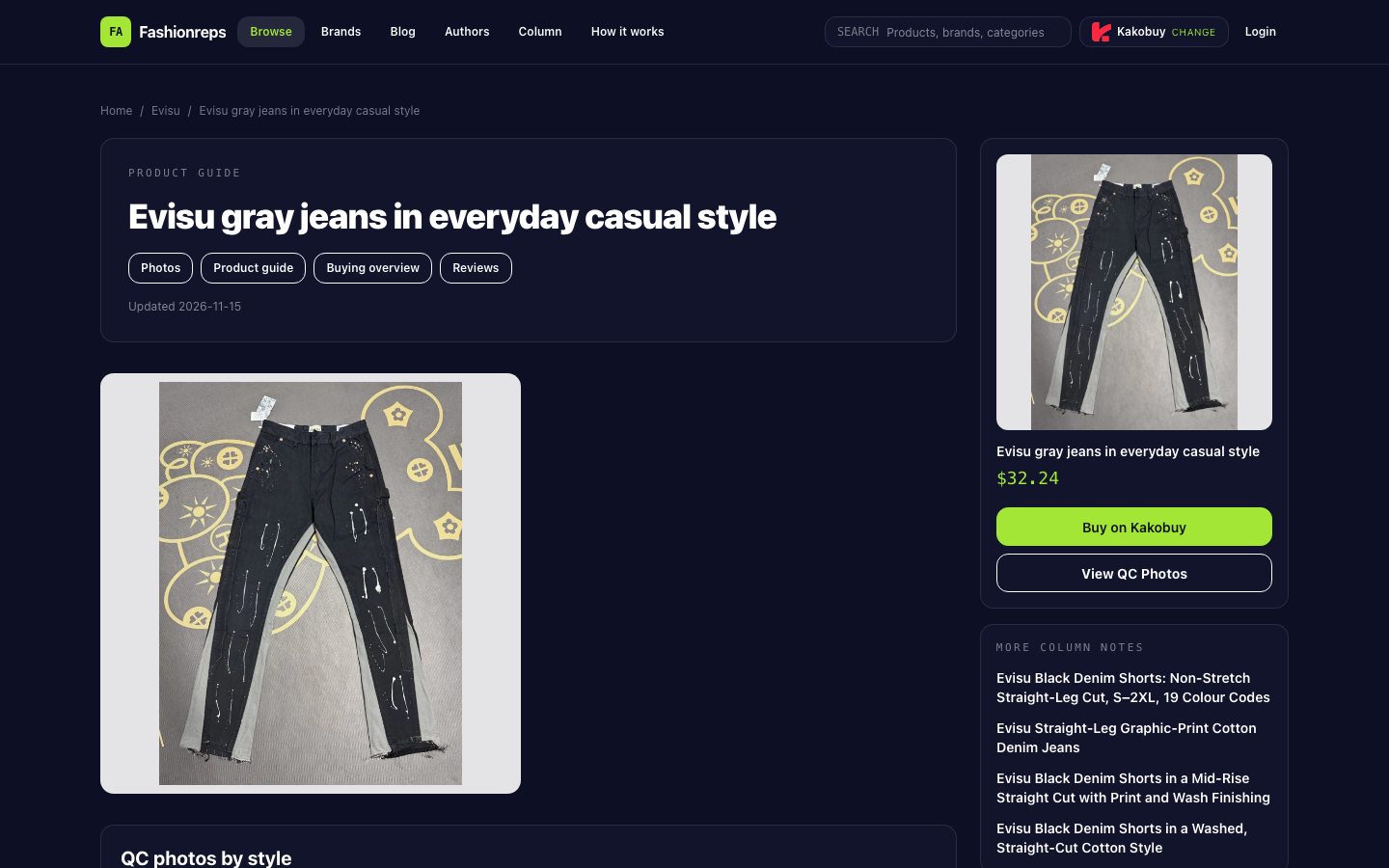

If you're considering these Evisu gray jeans, the first issue to resolve isn't styling—it's whether the sizing and inseam will work with your existing wardrobe. The page lists both numeric waist sizes 28–36 and letter sizes S–3XL, but ordering based on just one familiar size might not tell you whether the two size systems correspond to the same fit. The page currently has no independent buyer reviews, so a safer approach is to judge based on flat measurements and visible construction details.
What the Page Can Confirm First
The product page describes them as gray everyday jeans and lists two size systems: waist sizes 28–36 and letter sizes S–3XL. The page previously showed a reference price of $32.24, but the final item price, service fees, and international shipping costs must be confirmed on the shopping agent page—don't treat the reference price as the total cost.
The page doesn't provide independent buyer reviews, so we can't currently judge actual wearing comfort, post-wash changes, or fit on different body types. This article is meant as a pre-purchase checklist, not a personal try-on report.
Don't Interchange the Two Size Systems
First confirm which size system applies to the specific item you're buying. The simultaneous presence of numeric and letter sizes doesn't mean S, M, L can be directly converted to waist sizes like 28, 30, 32 using common clothing size charts. If the page doesn't clearly state the correspondence, rely on flat measurements provided on the product page.
Take a pair of jeans that fits you well, lay them flat, and record the following measurements:
- Waist width flat: measure the straight distance between the two ends of the waistband, noting any curve at the back waist.
- Hip width: measure across the widest point below the fly, avoiding including pocket bulges in the actual width.
- Front rise: measure from the top of the waistband to the crotch seam, used to assess coverage when sitting.
- Thigh width: measure a few centimeters down from the crotch seam, comparing room for movement.
- Inseam: measure from the crotch seam along the inner leg to the hem, focusing on stacking or ankle exposure when wearing shoes.
If you often choose between two sizes, don't just look at the waist. Front rise, thigh width, and inseam also affect sitting, bending knees, and proportions with different shoe styles.
Judge Inseam Separately for Different Shoes
If you mainly wear sneakers, observe where the hem falls on the shoe; if you also wear boots, compare the height of both shoe types and the stacking at the hem. If the inseam is too long, the hem may bunch up on the shoe; if too short, it may look fine when standing but expose more ankle when sitting or lifting your leg.
It's recommended to try your reference jeans with your everyday sneakers and boots, note the hem position in both cases, then compare with the inseam data on the product page. If the page only gives a size range without corresponding inseam measurements, the current information is insufficient to judge whether it suits your shoe combinations—hold off on drawing conclusions about length.
What Visible Details to Check After Receiving
The gray effect of these jeans should be observed under natural light. Lay the legs flat and first check if the color is roughly even on both legs, then look for noticeable shade differences at the knees, around the pockets, and near the seams. A single indoor photo is easily affected by lighting, so don't judge actual color difference solely by the screen.
Then check the back pockets and side seams:
- Whether the stitching along the back pocket edges is continuous and roughly symmetrical in position.
- Whether the side seams run straight from the waist to the hem without noticeable twisting.
- Whether there are skipped stitches, loose threads, or inconsistent stitch density at the junctions of pockets, fly, and waistband.
- Whether the stitching at the hips and thighs pulls noticeably when sitting or bending knees.
- After sitting, whether the back waist stays flat or gaps outward or slides down.
These observations help you distinguish sizing issues from construction issues. If the waist fits but the thighs are tight, simply increasing the waist size may not improve the overall proportions; if the waist fits but the inseam is too long, prioritize checking for a more suitable length option rather than just adjusting the waist.
Decide Next Steps Based on Three Outcomes
The first scenario is when the numeric or letter sizes have a clear correspondence, the flat waist, hip, front rise, thigh width, and inseam are all close to your reference jeans, and the color and stitching under natural light show no significant abnormalities. At this point, you can proceed to confirm the final price, service fees, and international shipping on the shopping agent page before deciding to order.
The second scenario is when the waist range is clear but there are no corresponding flat measurements or inseam data. You can only confirm a rough size range, not reliably judge the length, seated comfort, or shoe compatibility. You should prioritize obtaining actual measurements of the specific item before choosing.
The third scenario is when the page's sizing system, specific inseam, or item condition cannot be matched, or there are obvious issues with visible stitching. In this case, don't buy just because the reference price is low. Addressing the information gaps in sizing and construction first is usually safer than bearing return or forwarding costs after ordering.
For these Evisu gray jeans, the most valuable order of evaluation is: first confirm how the numeric and letter sizes correspond, then compare five flat measurements with your existing jeans, and finally check the gray uniformity, back pocket stitching, side seams, and stress points when bending knees under natural light. This way, you can separate 'wrong size' from 'construction not as expected,' and won't mistake the page's reference price or lack of buyer reviews for a purchase guarantee.