Editor score 4.2 / 5
Whether this Loewe colored cotton short-sleeve tee is worth buying doesn't hinge on the brand name or price tag on the page—it comes down to whether you want a loose, drop-shoulder, longer-body fit, and whether the seller can provide enough specific style evidence. The current page lists it as a loose short-sleeve cotton top in sizes XS to L, with pocket details, non-iron treatment, and a weight of 250 to 300 grams noted. But the page has no independent bu
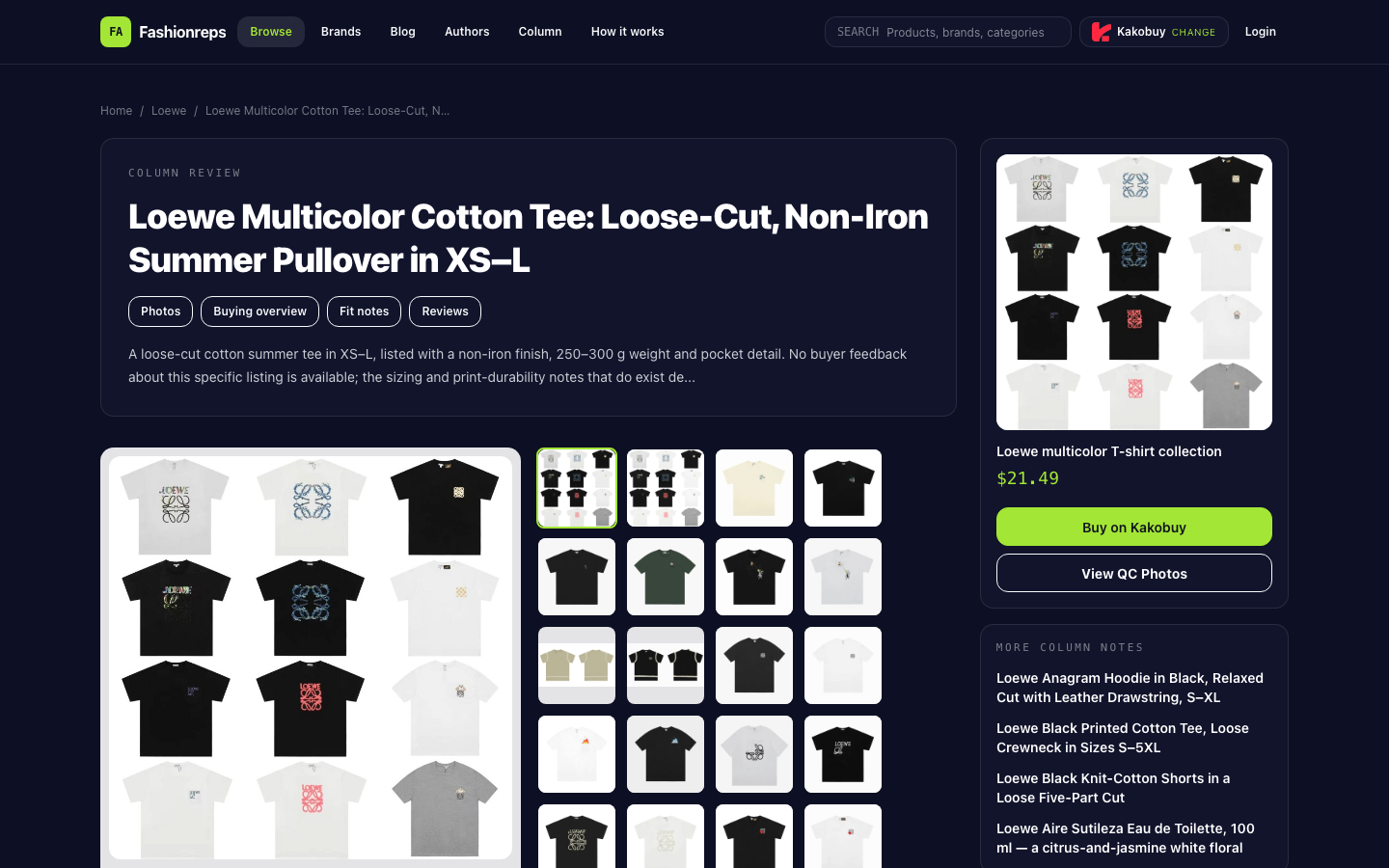
Whether this Loewe colored cotton short-sleeve tee is worth buying doesn't hinge on the brand name or price tag on the page—it comes down to whether you want a loose, drop-shoulder, longer-body fit, and whether the seller can provide enough specific style evidence. The current page lists it as a loose short-sleeve cotton top in sizes XS to L, with pocket details, non-iron treatment, and a weight of 250 to 300 grams noted. But the page has no independent buyer feedback for this item, so you can't judge print durability from the description alone.

First, Decide If You Want a Loose or Slim Fit
The page info shows this tee has a loose cut, and the brand's similar cotton tees typically feature drop shoulders and a longer body. This fit suits those who want a natural shoulder drop and extended coverage, not those prioritizing a fitted, clean short-sleeve silhouette.
If you usually like slim or regular-fit tees, don't order your usual size. The page gives a size range of XS, S, M, L, with about a 3 cm tolerance. From known brand sizing cues, XS has a shoulder width of about 48.8 cm and S about 50 cm; these figures only help you understand the fit tendency, not replace the actual flat measurements for this item.
Before ordering, consider this:
- If you want to keep the drop-shoulder and longer-body effect, compare it to your own similar loose tees, not just your height and weight.
- If you want a silhouette closer to slim or regular fit, prioritize getting flat chest width, shoulder width, and length measurements, then consider if you need to size down.
- If you're worried about the body being too long, you must check the length specifically; chest width or size letters alone won't tell you where the hem will fall.
- If the seller only provides size labels from XS to L without flat measurements, don't interpret "true to size" as suitable for all body types.
What to Check in Flat Measurements
Ask your shopping agent for flat photos or measurement data for your specific color and size, including at least chest width, shoulder width, and length. It's best to confirm the measuring method—for example, is chest width measured armpit to armpit horizontally, and is length measured from the highest shoulder point to the hem. Inconsistent measuring methods can make numbers from different items incomparable.
When checking, compare the data with a tee you already own and are happy with:
- Lay your tee flat and measure chest width, shoulder width, and length.
- Note the maximum and minimum ranges you can accept.
- Compare the agent's target item measurements item by item.
- Pay special attention to whether shoulder width and length are both on the larger side, because a loose fit might mean not just a wider chest, but also more pronounced drop shoulders and a longer body.
- If the measured data differs significantly from the page description, first ask to confirm the specific color, size, and batch before deciding to order.
The 3 cm tolerance mentioned on the page means measurements can't be taken as absolutely precise. If you're between sizes or very sensitive about length, factor in this tolerance rather than relying on a single number.
Separate Print Risks from This Item's Evidence
Regarding print durability, what's certain is: the page has no independent buyer feedback for this specific item. It also mentions that a public review of a Loewe printed cotton tee described fading, blurred lines, and thread wear after a few wears. This is background info on the brand's similar printed tees, not a tested conclusion for this exact item, color, or batch.
So, before ordering, ask the agent to provide:
- Front and back QC photos for your specific color.
- Close-up details of the print to check if the edges are clean, with no obvious bleeding or broken lines.
- Stitching photos of the collar, cuffs, hem, and pocket area.
- If there are different color or pattern versions, confirm the photos match the exact version you plan to buy.
If you only see distant shots, you can't judge the print edges and stitching; without QC photos of your color, you can't substitute photos of another color. The page mentions non-iron treatment, cotton fabric, and 250 to 300 grams weight—that's product page info, not proof of long-term wear testing.
When to Proceed and When to Hold Off
Consider proceeding when evidence is relatively complete: you genuinely like a loose, drop-shoulder, longer-body fit; the agent can provide flat chest width, shoulder width, and length for your color and size; and you have clear print and stitching QC photos. Still, treat it as a choice based on page info and pre-order verification, not a product validated by ample buyer feedback.
If more evidence is needed, don't rush to pay: the page only has size labels without flat measurements; or there are product photos but no close-up of the print in your color. For those wanting a slim fit, missing length and shoulder width data is especially critical.
Situations to hold off typically include: the agent can't confirm your specific color or size; QC photos don't match the product page; print detail photos are too blurry; or you need a clear long-term durability record that the current page can't provide. Brand-level print feedback serves as a risk reminder, but can't replace this item's independent evidence.
Conclusion
This tee is more suitable for those who clearly want a loose, drop-shoulder, longer-body fit. If you aim for a slim or regular fit, first check flat shoulder width, chest width, and length, and account for the possible 3 cm measurement error. On prints, you can only confirm a risk warning from the brand's similar products, not assert that this style will definitely fade or develop loose threads.
The safest next step is to request flat measurements for your color and size, close-up print photos, and stitching photos of key areas before ordering. With complete evidence, you can judge the fit; without it, hold off on the purchase rather than substituting size letters or brand impression for verification.